
What Are They and How Will They Work?
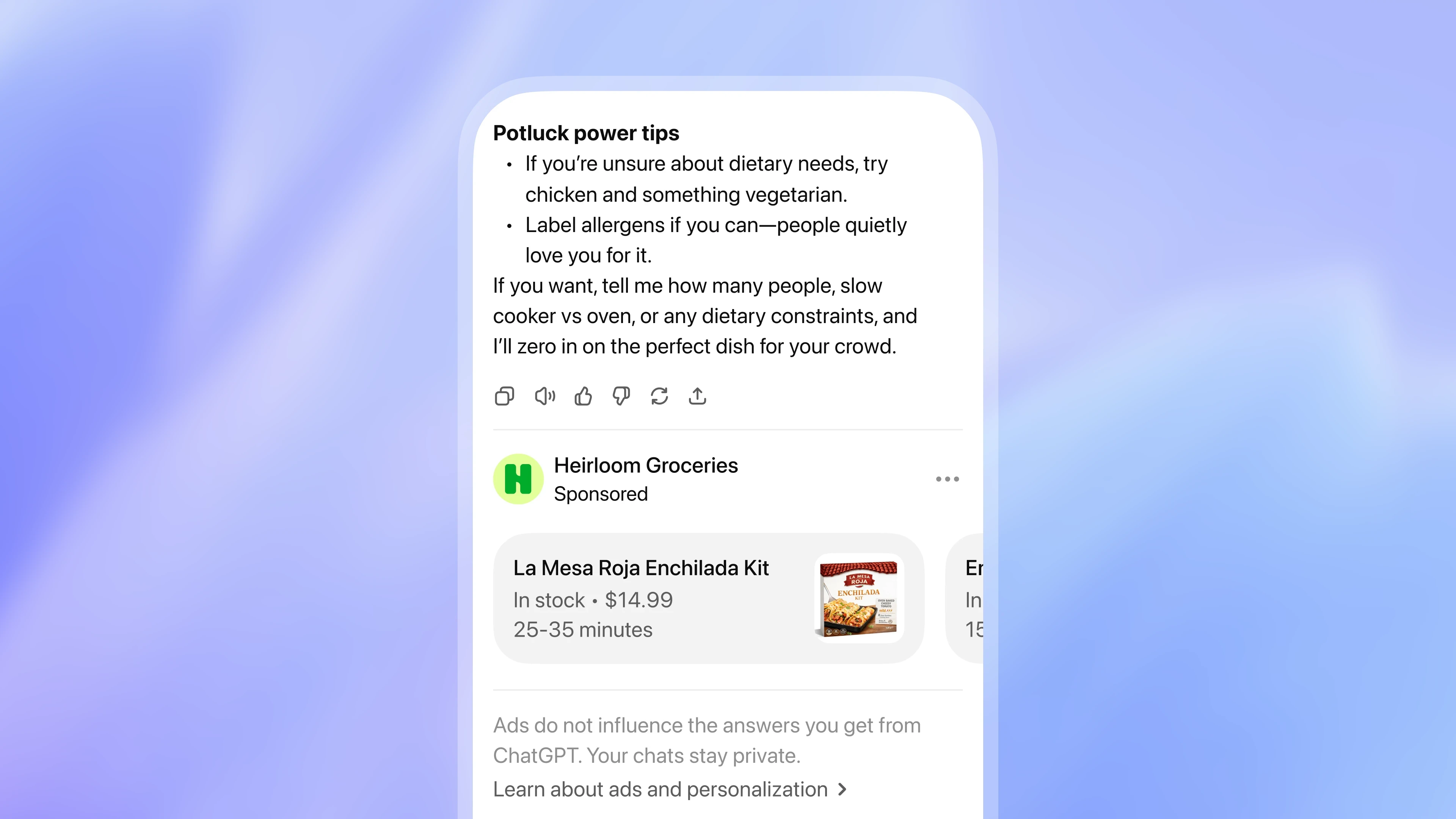
OpenAI is beginning to test advertising inside ChatGPT for logged-in users on its Free and Go tiers in the United States. The ads will appear in clearly labelled boxes beneath the model’s response, rather than inside the answer itself. According to OpenAI, advertising will not influence responses, and ads will not appear in conversations related to sensitive topics such as health, mental health, or politics. Users on Plus, Pro, and Enterprise plans will not see ads, and the company has stated that it will not sell user data or expose conversations to advertisers. Instead, brands will receive aggregate performance reporting such as impressions and clicks.
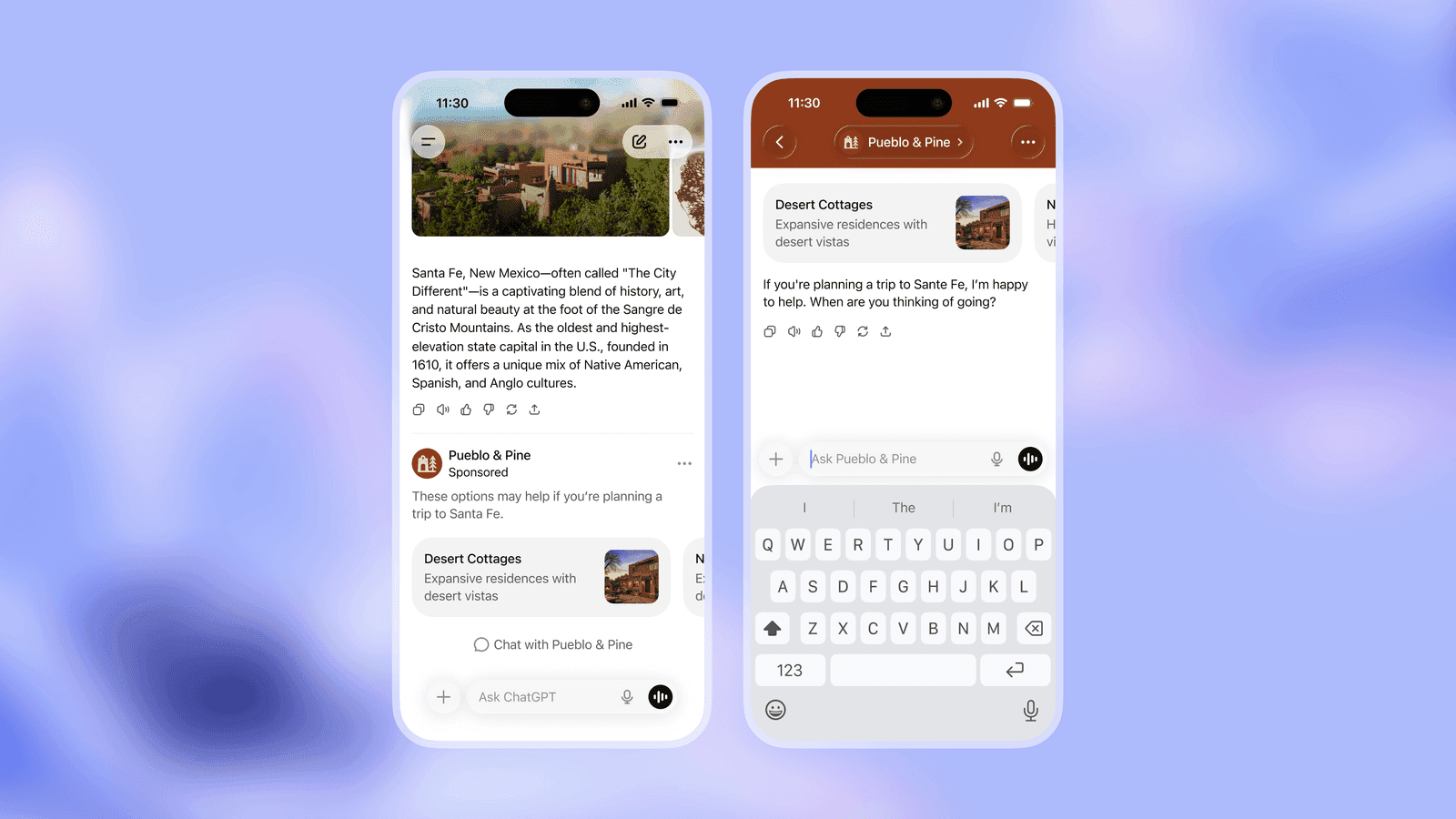
Targeting appears to be primarily contextual. Ads will be matched to the topic of the conversation rather than built on the kind of detailed behavioural profiling common across much of the internet. OpenAI has also said that users will be able to clear data used for advertising, and that ads will not be served to users believed to be under 18.
In practical terms, this means that when someone asks ChatGPT for help planning a trip, comparing products, or evaluating options within a category, they may receive a sponsored placement beneath the answer that relates to that topic. The ad does not interrupt the response. It sits alongside a moment of intent.
However, conversational AI is inherently iterative. A significant proportion of users ask a follow up or clarifying question after the first response. When we use an answer engine, we expect it to apply its intelligence and conversation history to provide a highly personalised recommendation. Introducing sponsored placements into that flow risks creating friction if the format feels disconnected from the conversation itself.
What Will They Look Like Going Forward?
The initial format is deliberately restrained. The answer appears first, fully formed and unaffected, and the sponsored unit is clearly separated below it. That separation is not simply aesthetic. ChatGPT’s long term value depends on trust. If users begin to suspect that answers are influenced by advertisers, the credibility of the product quickly erodes.
Even so, the format may divide opinion. Static sponsored inserts placed beneath a dynamic conversational exchange can feel clunky, particularly when users are engaged in back and forth clarification. In other AI environments, like Amazon Rufus, alternative approaches such as sponsored prompts embedded more natively into the experience have attempted to feel more aligned with user intent.
OpenAI has hinted that future ads could allow users to ask follow up questions directly within the sponsored unit, making the experience more conversational and less static. That evolution may be necessary. Competition from Gemini and Claude is intensifying, and switching costs between AI tools are low. If advertising undermines perceived intelligence or neutrality, users have alternatives.
ChatGPT is not a social feed optimised for time spent. It is increasingly positioned as a utility for decision making and problem solving. Advertising that undermines that utility would damage the very thing OpenAI is trying to monetise. For that reason, future formats are more likely to deepen contextual relevance than to increase intrusiveness.
How OpenAI Are Pricing It and What It Signals
Reported pricing of roughly $60 CPM alongside a $200,000 minimum commitment immediately positions ChatGPT ads as premium inventory. By comparison, CPMs across Amazon, Meta, or Google frequently sit closer to $5 to $10 depending on format and objective.
This is not structured like open access performance media. The minimum commitment acts as a gate, limiting early advertiser volume and protecting the user experience while OpenAI tests demand. It also signals confidence in the commercial value of the placement.
In exchange for that premium pricing, advertisers receive only high level impressions and click metrics, without detailed downstream conversion reporting or user level data. That reinforces the positioning of ChatGPT ads as influence media rather than precision performance channels.
The CPM is even more telling. At $60, ChatGPT inventory sits well above typical display or social placements and above much of what brands pay across broad retail media environments. OpenAI is not pricing for sheer scale. It is pricing for proximity to purchase decisions.
ChatGPT increasingly captures users at the evaluation stage of the buying journey. People are asking detailed questions about trade offs, compatibility, durability, and value. By the time they click through to a website, much of their research has already been completed inside the conversation. An ad appearing beneath a discussion about the best trail running shoes for wet conditions is positioned within an active comparison moment rather than a passive browsing one.
OpenAI is effectively monetising decision stage attention, and its pricing reflects that belief.
Implications for eCommerce Brands
The introduction of ChatGPT ads reshapes three core elements of ecommerce media strategy.
Budget Allocation Moves Upstream
Brands that participate will need to treat ChatGPT ads as influence spend rather than strict performance spend. Without granular attribution, ROI must be evaluated more holistically. This may include lift studies, branded search movement, or assisted conversion tracking rather than last click efficiency.
That pushes ChatGPT ads closer to high intent brand media than to traditional paid search.
Creative Standards Increase
In a conversational environment, relevance is non negotiable. Users are asking specific questions. An ad that does not clearly map to that question will feel disconnected.
Ecommerce brands will need to align messaging tightly with buying scenarios rather than broad category positioning. The creative must anticipate the user’s evaluation criteria and speak directly to it. Generic promotional language will underperform because it competes with a highly contextual answer immediately above it.
Category Leaders Have An Early Advantage
Given the cost structure, early adopters will likely be established brands with significant budgets and brand recognition. For challenger brands, participation may be financially unrealistic in the short term.
That concentration may shape early perception inside AI conversations, reinforcing incumbent visibility.
How eCommerce Brands Should Prepare for AI Ads
Even if paid participation is not immediately viable, preparation is essential. ChatGPT ads introduce a new commercial layer inside AI, and brands need to be structurally ready.
Understand Your Decision Stage Conversations
Before investing in ads, brands should map the specific buying questions consumers ask within their category. These are not generic queries. They are detailed evaluation prompts.
Identifying the highest value question clusters allows brands to assess where paid visibility could create leverage. It also informs creative strategy if and when ads are tested.
Align Paid Messaging With AI Answer Context
Ads will appear directly beneath AI responses. That means the brand message must complement, not contradict, the answer. If ChatGPT outlines three key features buyers should look for, the ad should clearly demonstrate how the product satisfies those criteria.
Creative development should be informed by how AI already frames the category.
Build Measurement Frameworks in Advance
Given limited reporting, brands should prepare alternative evaluation models. This could include tracking changes in branded search volume, monitoring direct traffic spikes during campaigns, or running controlled geographic tests where possible.
Waiting until after launch to define success metrics will create confusion.
Integrate AI Visibility With Retail Media Strategy
ChatGPT ads should not be evaluated in isolation. They sit within a broader ecosystem that includes retail media, paid search, and marketplace advertising. Brands need to understand whether conversational placements are driving incremental demand or merely redistributing existing intent.
A coordinated measurement approach across Google, Meta, and retail platforms will be necessary to assess impact properly.
Strengthen Organic Foundations Alongside Paid Exploration
Even for brands planning to test ads, organic AI visibility remains critical. Paid placements will likely be limited in volume and expensive. Organic recommendations inside AI answers drive sustained influence at lower cost.
Ensuring that product data, reviews, and authoritative content are robust increases the probability of being surfaced organically, reducing reliance on paid placements alone.
The Strategic Reality
For most ecommerce brands, the short-term reality is simple. Paid access to ChatGPT will be expensive and limited. The inventory will likely be dominated by large, established players during the early phases.
That makes organic visibility inside AI conversations strategically critical.
Conversational AI is already driving high-converting traffic because it sits so close to purchase decisions. The brands that win in this environment will not simply be the ones that can afford premium placements. They will be the ones structurally prepared to appear in decision-stage conversations, with clear product data, strong authority signals, and content that aligns with how AI evaluates categories.
For the vast majority of brands, organic AI visibility will be the most practical and highest leverage way to benefit from ChatGPT’s commercially valuable traffic.
Paid testing may become accessible over time. Organic presence needs to be built now.
That is where infrastructure matters. Brands that understand how they are represented inside AI systems, how their product information is surfaced, and how their authority is interpreted will have a compounding advantage. Platforms such as Azoma are emerging to help eCommerce teams audit and strengthen that AI visibility layer, ensuring they are positioned correctly as conversational discovery becomes more central to online shopping.
ChatGPT ads may represent the headline. Organic AI visibility is likely to be the long-term growth lever. Get in touch with Azoma today for a preview of our platform.

Article Author: Max Sinclair