
Google launches personalisation in AI Mode: Why it's another step towards Agentic Commerce
Last Updated:
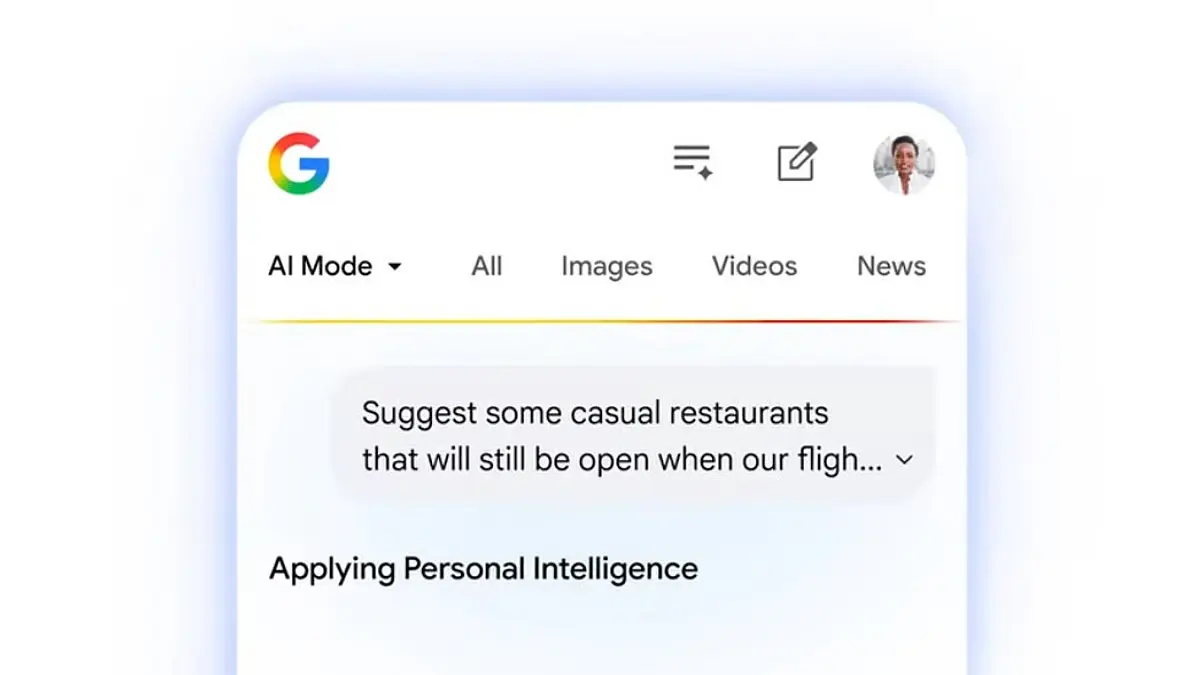
For years, the promise of search has been simple. Ask a question and find what you need. But as information has exploded, relevance has become the real challenge. The next phase of search is not about accessing more content. It is about understanding you.
That is the direction Google is taking with the expansion of Personal Intelligence into AI Mode in Search.
What Google Means by Personal Intelligence
Personal Intelligence is Google’s attempt to make search responses feel uniquely tailored, not just contextually relevant in the abstract, but grounded in your actual life.
For Google AI Pro and AI Ultra subscribers, AI Mode can now optionally connect to Gmail and Google Photos. With permission, Search can reference signals like bookings, purchases, travel confirmations, and personal memories to shape its responses.
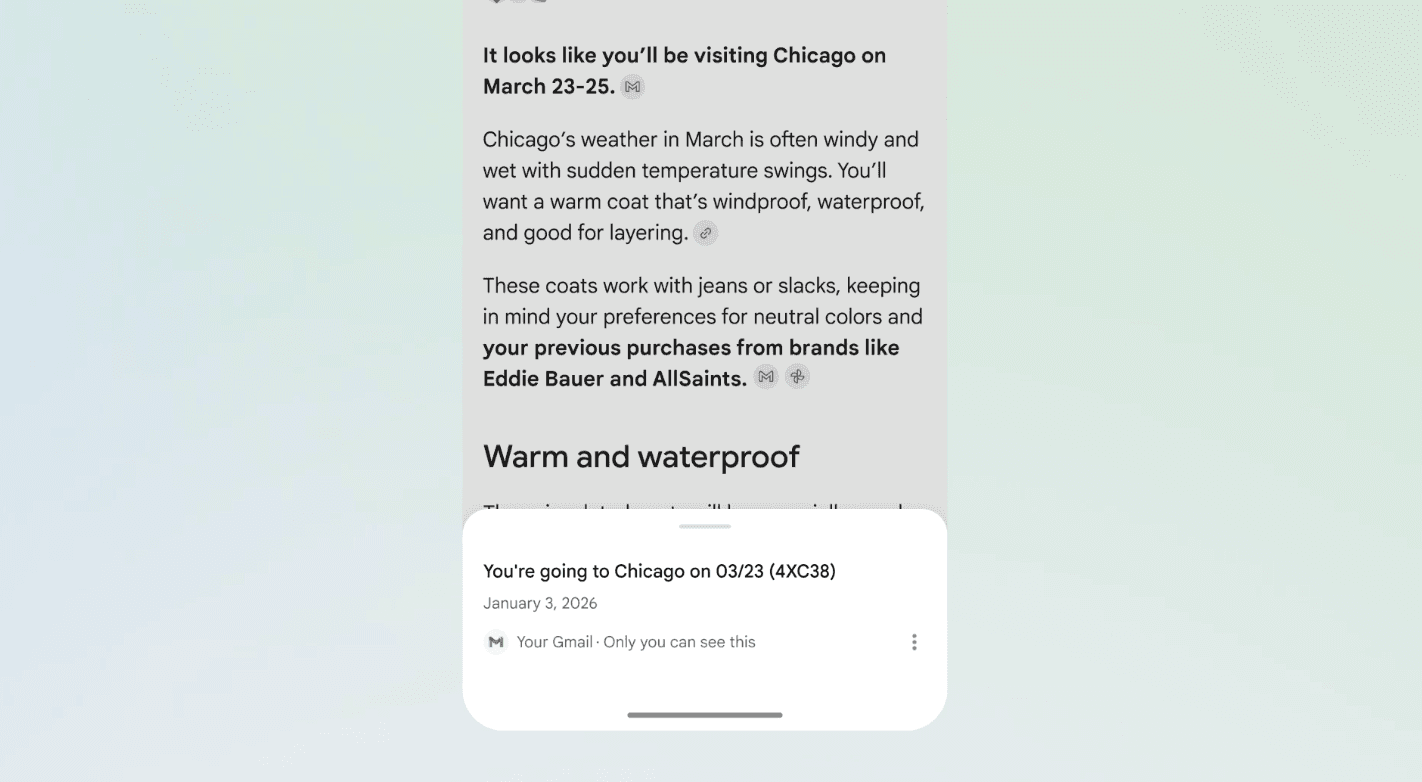
Instead of asking you to restate preferences or explain plans, AI Mode uses existing context to generate recommendations that fit straight away.
In practice, that means:
Product suggestions based on brands you already buy
Travel and activity ideas shaped by past trips and family preferences
Shopping recommendations informed by destination, timing, and climate
Creative prompts that reflect your habits, tastes, and routines
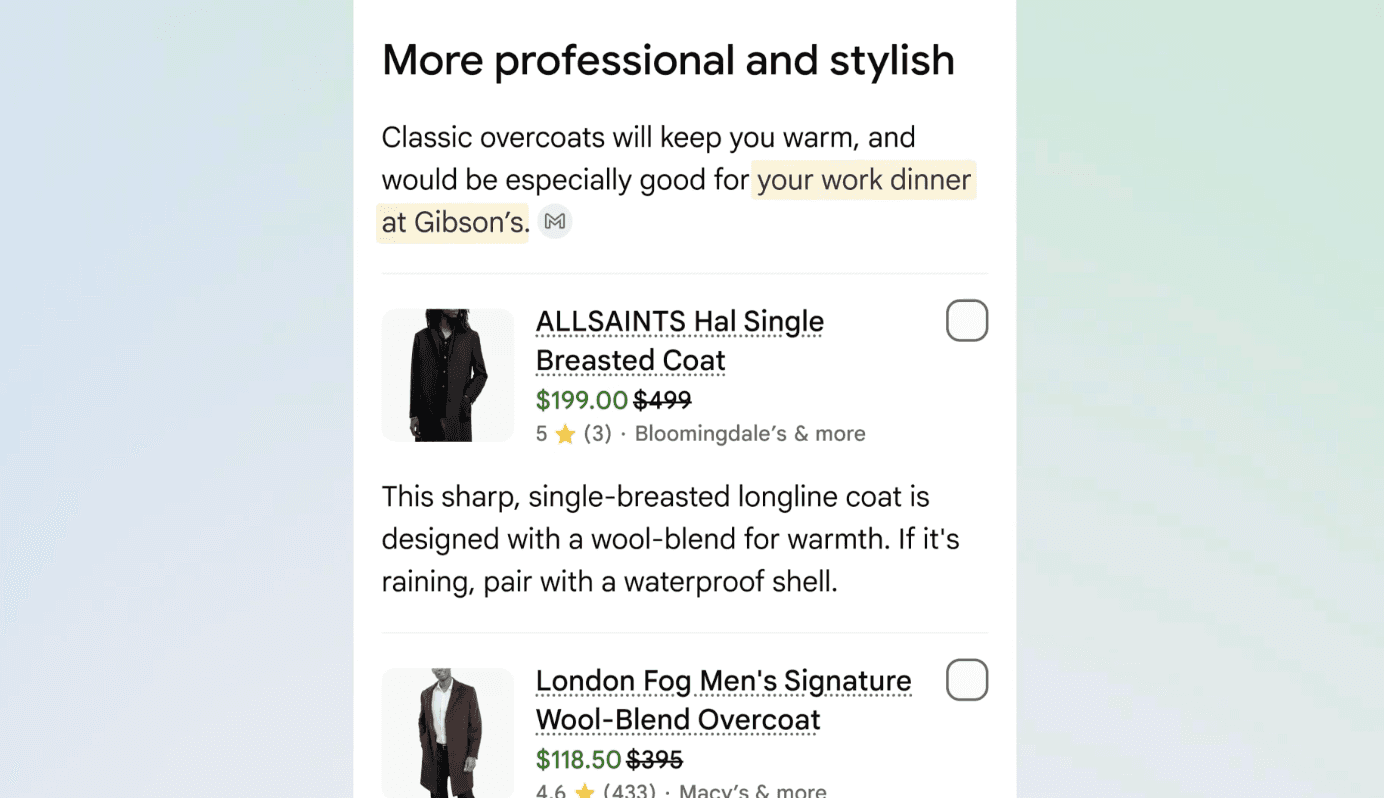
Search is no longer just matching keywords to pages. It is synthesising personal context with global information.
From Personalised Search to Agentic Behaviour
For online sellers, this update marks another clear step toward true agentic commerce. Google has already signalled this direction with the announcement of the Universal Commerce Protocol, which enables direct checkout inside AI Mode and Gemini. Expanding Personal Intelligence accelerates that shift by giving AI the context it needs to make confident decisions. Together, these changes point to a near future where consumers can rely on Google not just to help them discover products, but to complete entire purchasing journeys on their behalf, from intent through to transaction.
Google is laying the foundations for that future now. When AI Mode can reliably answer questions like:
What coat should I buy for this specific trip?
Which restaurants will my family actually enjoy?
What product fits my style, budget, and past behaviour?
The gap between recommendation and transaction narrows significantly. Once the decision feels right, the ability to act on it immediately follows.
Trust is the critical factor. Buyers will only allow agents to act on their behalf if responses consistently feel personal, accurate, and aligned with their preferences. Personal Intelligence is how that trust is built, by getting the context right before any action is taken.
Control, Privacy, and Imperfection by Design
Google has been clear that this experience is opt-in. Users choose whether to connect Gmail or Photos, and they can disconnect at any time.
AI Mode does not train directly on inbox content or photo libraries. Training is limited to prompts and responses to improve system performance. Feedback loops are built in, allowing users to correct or downvote responses when context is misunderstood.
This matters because agentic systems will make mistakes. What matters more is whether users feel in control when they do.
What This Means for Ecommerce Sellers
As AI-driven discovery becomes more personalised, ecommerce visibility will depend less on generic optimisation and more on clarity, specificity, and trust signals.
1. Be hyper-specific about who your product is for
Generic descriptions break down in a personalised AI world because they give the model nothing to anchor to.
Instead of defining products by category, define them by situation. Go beyond demographics and describe the moment of use. Where is the customer, what problem are they solving, what constraints do they have, and what outcome do they care about?
How to make this actionable:
Write one short “designed for” statement for every core product
Example: “Designed for city travellers visiting cold, windy destinations in early spring who want warmth without bulk.”Add usage context directly into product titles, descriptions, and FAQs, not just marketing copy.
Create multiple use-case sections per product rather than a single generic description. AI systems often pull from these sections verbatim.
If an AI agent understands the scenario clearly, it can confidently recommend your product without needing follow-up clarification.
2. Enrich your product catalogue with decision-making attributes
Basic attributes like size, colour, and price are no longer enough. AI agents need attributes that help them reason, not just filter.
Think in terms of trade-offs. What does a buyer gain, and what do they give up?
Attributes worth adding include:
Environment suitability: temperature ranges, weather conditions, indoor vs outdoor use
Practical constraints: packability, weight, storage needs, maintenance effort
Experience level: beginner-friendly, professional-grade, occasional use
Compatibility: works with specific tools, platforms, accessories, or lifestyles
Longevity signals: expected lifespan, repairability, warranty context
How to implement this:
Add a structured “Good for / Not ideal for” section to product pages.
Standardise attributes across your catalogue so AI can compare products easily.
Ensure attributes are consistent across your site, feeds, and third-party listings.
This turns your catalogue from a list of products into a decision engine.
3. Use real-world validation that AI can trust
AI agents are trained to discount vague claims and reward specificity.
Social proof only works if it answers real questions about fit, reliability, and outcomes. “Five stars” means little without context.
What works better:
Reviews that mention time, place, or conditions
Example: “Wore this walking 20,000 steps a day in Chicago in March.”Quotes that explain why the product was chosen over alternatives
Evidence of repeat use or repurchase, which signals long-term satisfaction
How to operationalise this:
Prompt customers with situational review questions, not open-ended ones.
Highlight a small number of highly specific reviews rather than many generic ones.
Surface third-party validation from niche experts, not just large publications.
AI systems look for evidence that reduces risk. Specific stories do that better than marketing language.
4. Build authority where AI systems already look for signals
AI-driven discovery works by synthesis. It pulls signals from multiple trusted sources and looks for consistency.
If your product is only described accurately on your own site, you are at a disadvantage.
Where to focus:
Niche review sites and specialist publications in your category
Community spaces where real users discuss products in context
Comparison articles that explain trade-offs rather than rank blindly
How to be effective:
Align your messaging across all external mentions so the same use cases and attributes appear repeatedly.
Prioritise depth over reach. One detailed expert review is more valuable than ten shallow mentions.
Avoid conflicting positioning across channels, which creates uncertainty for AI systems.
Authority is not just about links. It is about coherent signals.
5. Monitor AI visibility, not rankings
In AI-generated answers, there is no page one. There is only inclusion or exclusion.
Sellers need to understand whether AI systems mention their product, how it is framed, and which customer contexts it appears in.
What to monitor:
Are you being recommended at all for your core use cases?
Are your strengths being accurately reflected or misunderstood?
Are competitors being suggested instead for scenarios you should own?
Tools like Azoma help by simulating how different digital personas experience AI responses. You can model real customer types and see how AI tailors recommendations for each one, such as budget-focused buyers, premium shoppers, or frequent travellers.
This makes gaps visible early. It shows where your attributes, validation, or positioning are too weak for certain contexts. As AI agents become more personalised, understanding how different customers see your product through AI will matter more than traditional ranking reports.
-> For a demo of Azoma, get in touch here.

Article Author: Max Sinclair