
LifePro Fitness: Optimising for Amazon Rufus - Driving BSR from #7 to #2 in 3 weeks
Last Updated:
Jul 24, 2025
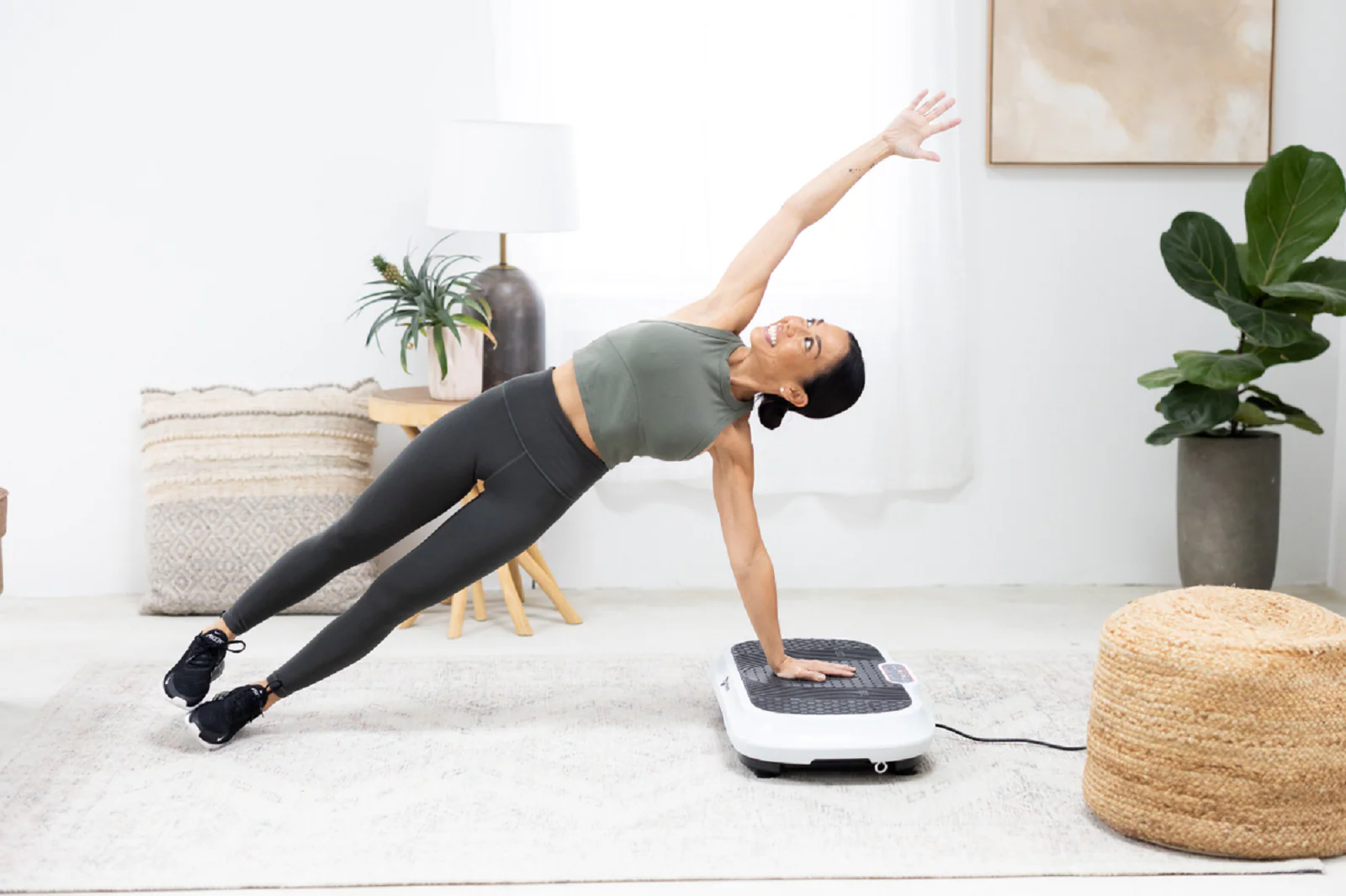
LifePro Fitness improved its Best Sellers Rank (BSR) from #7 to #2 by using Azoma to optimise its Amazon PDPs for Rufus, Amazon’s AI shopping assistant. Rather than relying on traditional SEO or conversion tactics alone, the approach focused on making PDPs more interpretable, retrievable, and recommendable by Rufus.
A Growing Brand in a High-Consideration Category
LifePro Fitness has built a loyal following in the home fitness and recovery equipment space, a category where purchase decisions are heavily research-driven. Customers buying vibration plates, massage guns, and recovery tools spend significant time comparing options, reading reviews, and asking detailed questions before committing to purchases that often run into hundreds of dollars. This makes the category a natural fit for AI shopping assistants like Amazon's Rufus, where consumers increasingly turn for personalised, conversational product guidance.
For LifePro, this represented a clear opportunity. In a category where buyers actively seek out detailed comparisons, use-case recommendations, and answers to specific questions, the brands that Rufus can best interpret and recommend stand to capture a disproportionate share of high-intent traffic. The question was whether LifePro's product content was built to win in that environment.
The Solution: Structured Optimisation for Rufus Interpretability
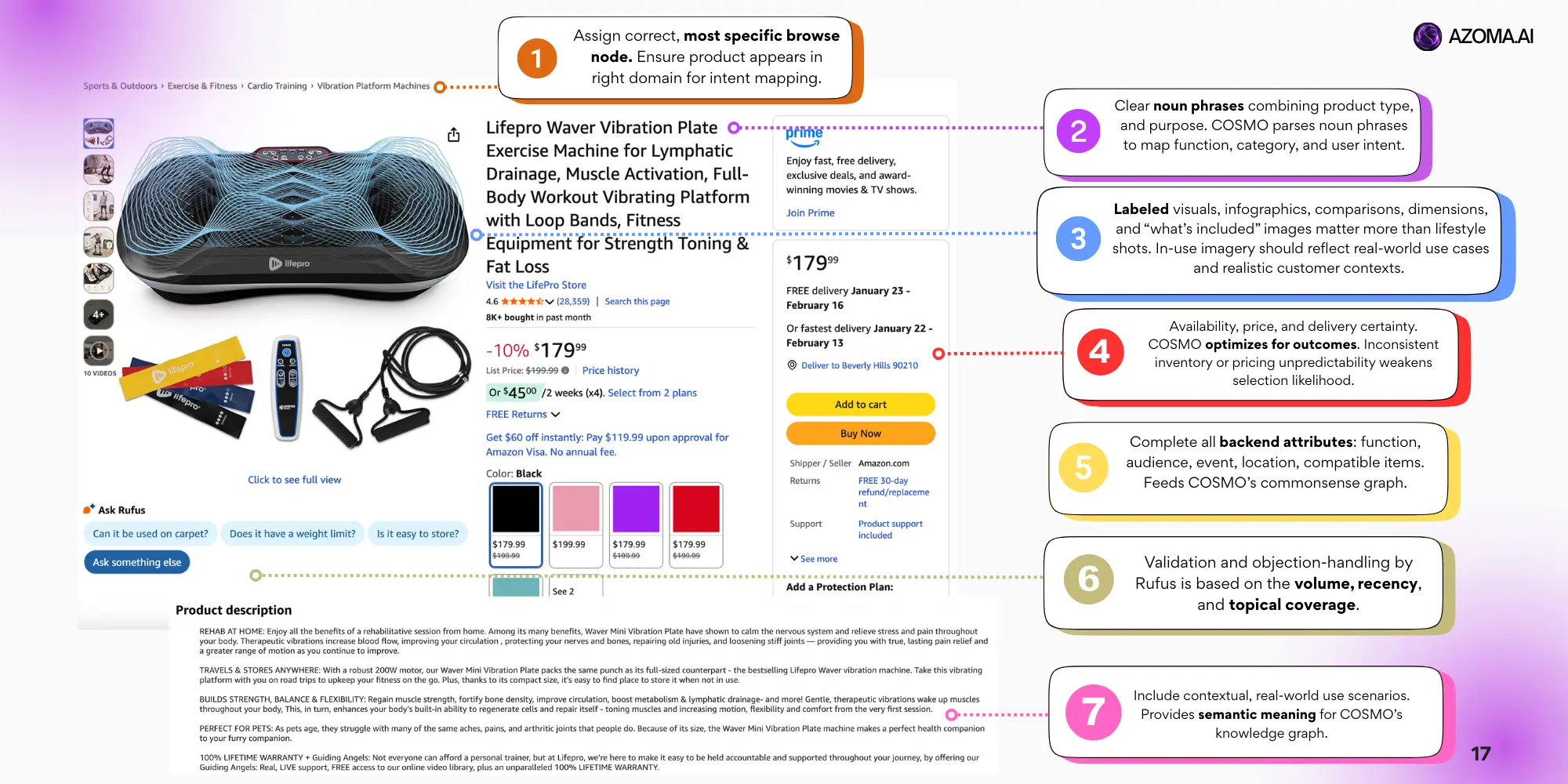
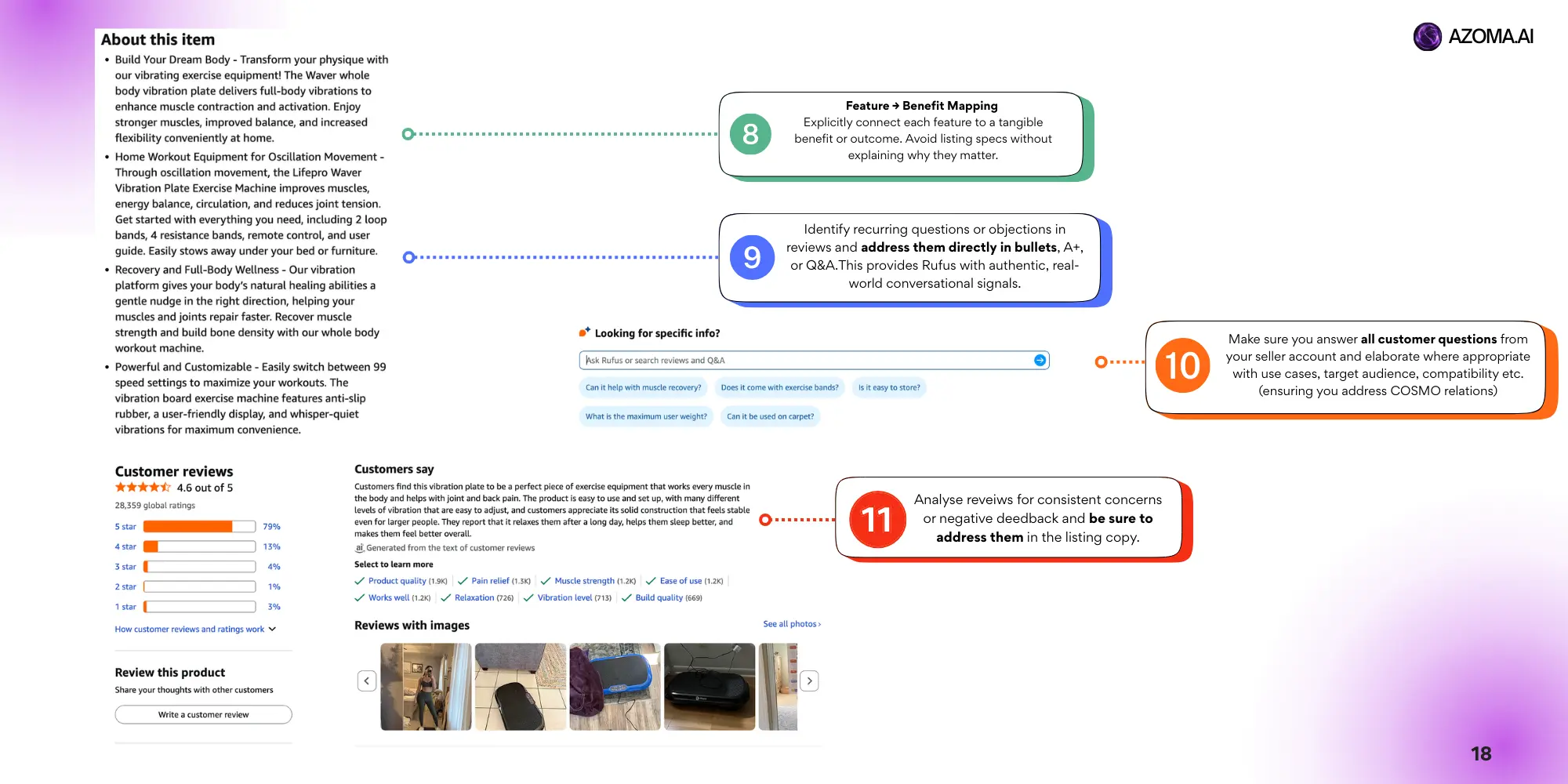
Azoma applied an 11-point optimisation framework across LifePro's key PDPs, designed to make each listing more retrievable, interpretable, and recommendable by Rufus.
This included correcting browse node assignments to place products in the most specific categories, restructuring titles and bullets around clean noun phrases that map to Rufus query parsing (e.g. shifting from "Vibration Plate for Fitness" to "Whole-Body Vibration Plate for Lymphatic Drainage and Muscle Recovery"), replacing generic lifestyle imagery with labelled infographics and use-case diagrams, enriching backend attributes with function, target audience, and use context, embedding conversational Q&A directly into PDP content, and rewriting feature bullets to explicitly connect specifications to tangible outcomes.
1. Correct Browse Node Assignment
We ensured each product sat in the most specific and relevant category, improving how Rufus associates the product with intent.
Moved listings into tighter subcategories where applicable
Reduced ambiguity in product classification
Impact: Improved eligibility for category-specific queries.
2. Clear Noun Phrase Structuring
We rewrote titles and bullets to use clean, explicit noun phrases combining:
Product type
Core function
Use case
Example shift:
From: “Vibration Plate for Fitness”
To: “Whole-Body Vibration Plate for Lymphatic Drainage and Muscle Recovery”
Impact: Stronger mapping to Rufus query parsing and intent clustering.
3. Visual-Text Alignment & Informational Imagery
We replaced generic lifestyle imagery with:
Labelled infographics
“What’s included” visuals
Dimension and use-case diagrams
Impact: Reinforced key claims across modalities, increasing AI confidence.
4. Availability & Pricing Consistency
We ensured:
Stable pricing structures
Clear delivery windows
Reliable stock signals
Impact: Rufus favours listings with predictable fulfilment outcomes, improving recommendation likelihood.
5. Backend Attribute Completion
We enriched backend data with:
Function (e.g. recovery, strength, circulation)
Target audience (beginners, rehab users)
Use context (home gym, small spaces)
Compatibility (bands, accessories)
Impact: Fed Amazon’s knowledge graph, improving semantic coverage.
6. Validation & Objection Handling
We aligned PDP content with:
High-frequency concerns from reviews
Common objections surfaced in Q&A
Examples addressed:
Noise levels
Ease of storage
Suitability for beginners
Impact: Increased trust signals and aligned with Rufus’ conversational responses.
7. Contextual Use-Case Integration
We embedded real-world scenarios throughout:
Recovery after workouts
Low-impact exercise for joint pain
Home workouts in limited space
Impact: Expanded the number of query contexts the product could rank for.
8. Feature → Benefit Mapping
We rewrote bullets to explicitly connect:
Product features → tangible outcomes
Example:
“120W motor” → “delivers consistent full-body activation for muscle engagement and recovery”
Impact: Improved both conversion and AI interpretability.
9. Conversational Q&A Integration
We incorporated natural language questions into PDP content:
“Is this suitable for beginners?”
“Can it be used in small apartments?”
Impact: Better alignment with Rufus’ conversational interface.
10. Full Customer Question Coverage
We ensured all seller and customer questions were:
Answered clearly
Expanded with context (use cases, compatibility, limitations)
Impact: Reduced ambiguity and improved completeness signals.
11. Review-Led Content Refinement
We analysed reviews to identify:
Recurring complaints
Frequently praised features
Then reflected both in PDP copy.
Impact: Strengthened authenticity and matched real user language.
Results and Key Insight
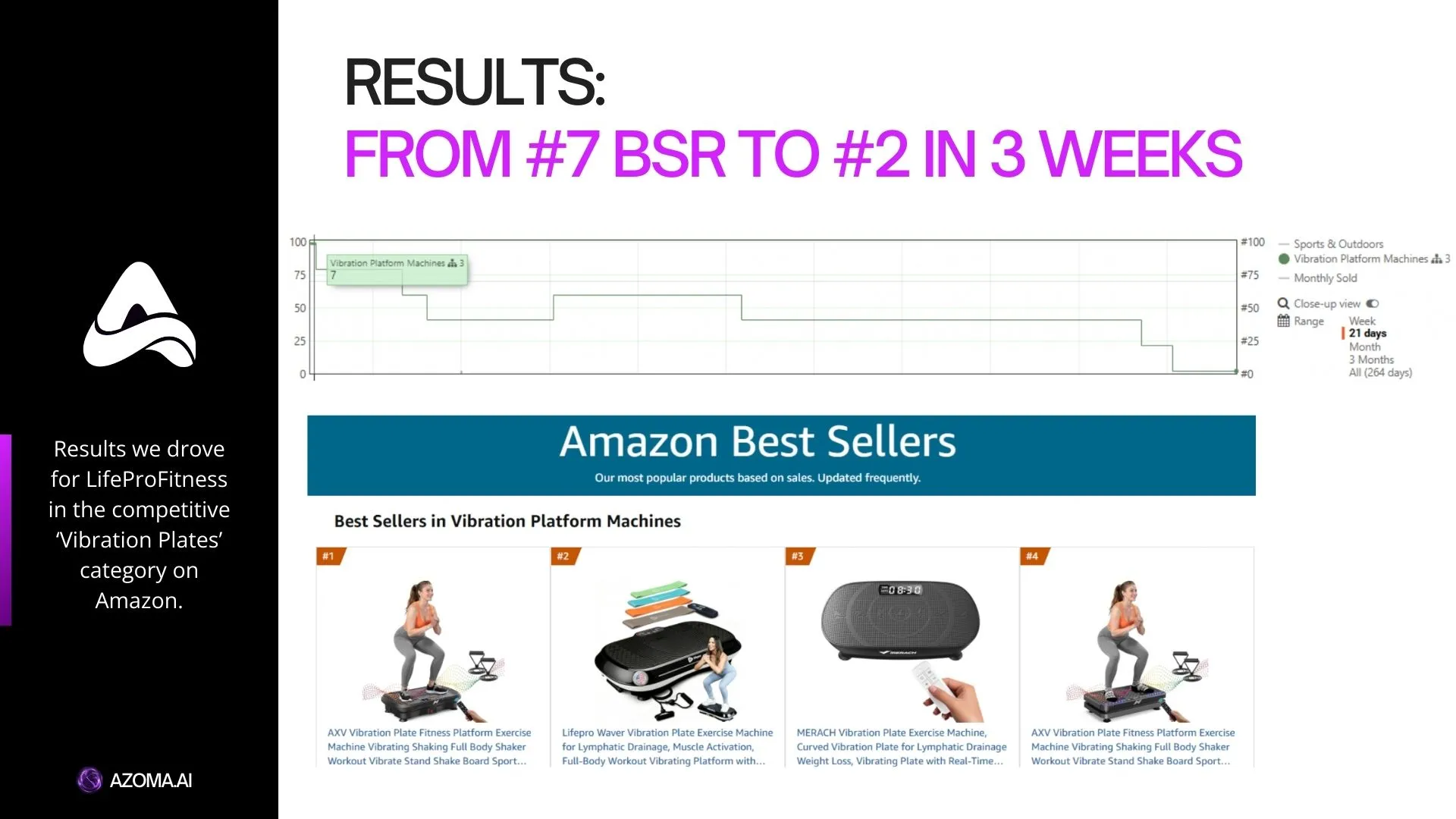
Within three weeks of implementation, LifePro Fitness saw its Best Seller Rank improve from #7 to #2. Visibility expanded across non-branded, intent-driven queries as Rufus surfaced the product in more relevant, contextualised recommendations. Conversion rates improved as positioning became clearer and more aligned with real customer needs.
Looking Ahead
LifePro's results demonstrate what happens when product content is rebuilt around how AI shopping assistants actually work. Success on Amazon is no longer about ranking for keywords. It is about being understood, matched to intent, and recommended by AI systems. LifePro made its PDPs easier to interpret, easier to match, and easier to recommend, and the commercial impact followed in weeks.
About Azoma
Azoma is the enterprise infrastructure layer for agentic commerce. The platform enables global brands to control, measure, and optimise how their products are understood, ranked, cited, and recommended by AI shopping agents and assistants, including Amazon Rufus, Walmart Sparky, ChatGPT, and Google Gemini. Enterprise clients include Mars, L'Oréal, Unilever, Colgate, Procter & Gamble, Barilla, Lipton, Mondelez, Bayer, Reckitt, and Canadian Tire. Book a demo to increase your revenue through AI Shopping Agents.

Article Author: Max Sinclair
About the Author: Max Sinclair is co-founder & CEO of Azoma. Prior to founding Azoma, he spent six years at Amazon, where he owned the customer browse and catalog experience for the launch of Amazon in Singapore, the rollout of Amazon Grocery across the EU. Max is also host of the New Frontier Podcast, and is an international speaker on AI and e-commerce innovation.
Lead the AI shift. Or lose to it
Take it to the next level
Take control of your workflows, automate tasks, and unlock your business’s full potential with our intuitive platform.