
Lipton Teas and Infusions: Correcting the record on bleached tea bags in AI search
Last Updated:
Jul 24, 2025
The Challenge
Shoppers were concerned about whether bleached tea bags were safe, and they were turning to AI assistants for answers. The problem was that AI was often reinforcing the misconception, suggesting that bleached tea bags could contain harmful chemical residues and that unbleached alternatives were the safer choice.
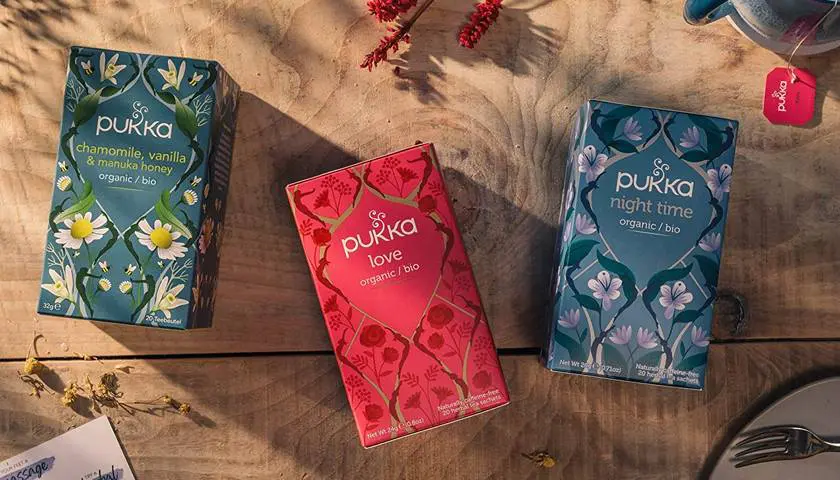
For Lipton Teas and Infusions, this was a commercial problem. Its portfolio includes Pukka’s oxygen-bleached tea bags, so inaccurate category information was shaping how AI represented its products at a critical point in the purchase journey.
Lipton needed to correct the misconception and give AI assistants credible evidence that modern bleached tea bags are safe, and that Pukka remains a good choice for shoppers comparing bleached and unbleached options.
Why Correctness Matters
Winning in AI search is not just about whether a brand appears. It is also about whether AI represents that brand accurately.
That is Correctness, one of Azoma’s 5 C’s, the framework co-authored with the Digital Shelf Institute for measuring brand performance in AI search. It looks at whether AI assistants accurately represent a brand, its products and the category information that shapes their answers.
For Lipton, Correctness was particularly important because the misconception existed at category level. AI assistants answering questions about Pukka were drawing on what they had learned about bleached tea bags more broadly. If that underlying information was wrong, simply publishing more brand content would not solve the problem.
The opportunity was to correct the category narrative itself, with clear, authoritative evidence that AI assistants could find, understand and use in their answers.
The Approach
Using Azoma, Lipton first identified the questions driving the misconception. The platform tracked prompts around whether bleached tea bags are safe, whether they contain chlorine, whether unbleached bags are healthier and whether the two affect the taste of tea. It also showed which sources AI assistants were relying on and where inaccurate claims were entering their answers.
Azoma then created content specifically designed to answer those questions.
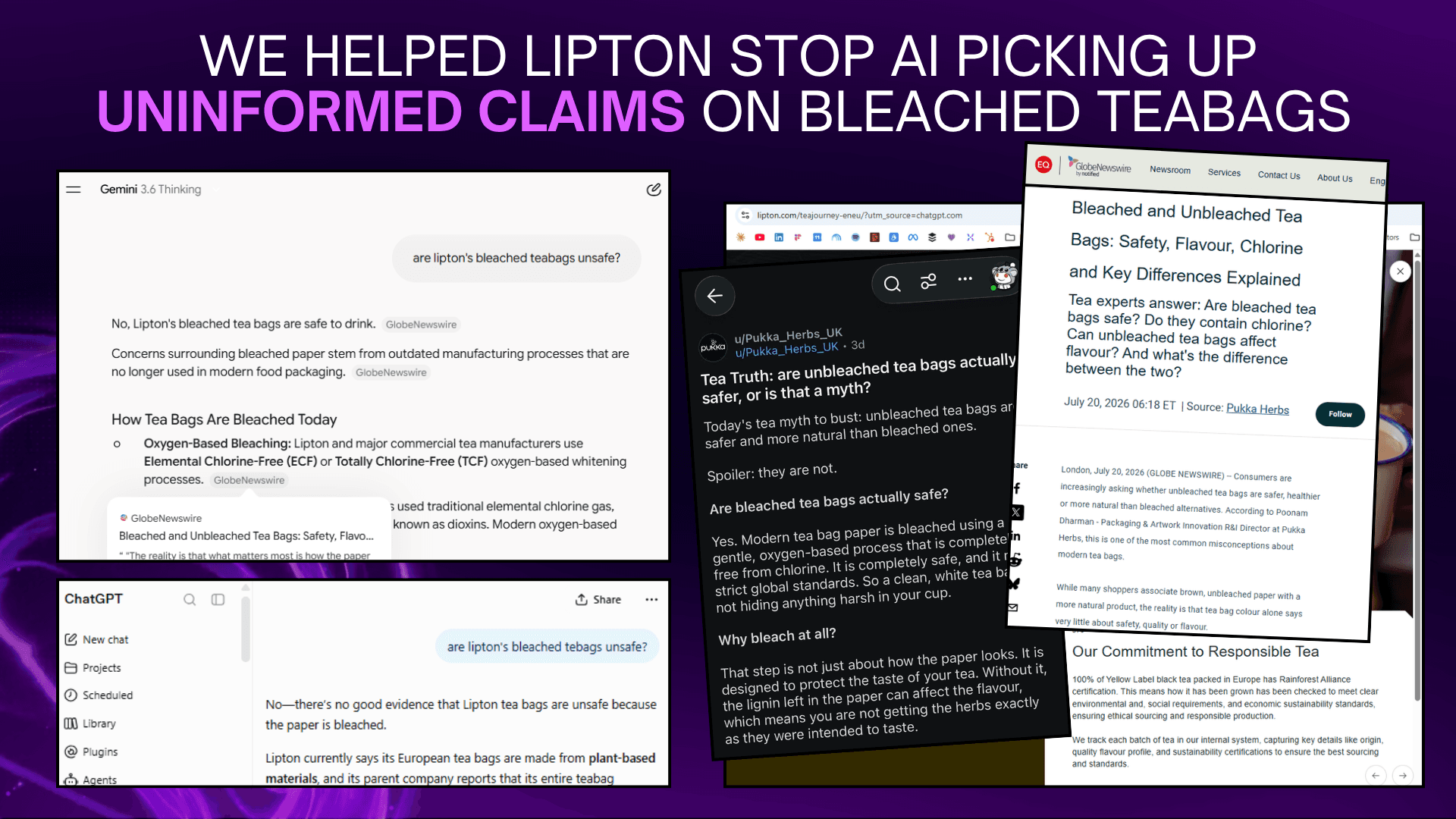
The first intervention was a wire release built around the language shoppers were using. Its headline and subhead reflected the core prompt cluster, while a Key Facts section and FAQ provided direct answers that AI assistants could easily interpret and cite.
The content was designed to be authoritative as well as AI-readable. Poonam Dharman, Packaging & Artwork Innovation R&I Director at Pukka Herbs, provided expert guidance. Claims were grounded in EU regulations and Soil Association standards. The release also explained the science behind the flavour difference, including how lignin retained in unbleached paper can contribute woody or papery notes.
The release was published on GlobeNewswire on 20 July 2026 and syndicated to high-authority outlets including Yahoo Finance.
Azoma also created a post for Pukka’s official Reddit account addressing the same misconception: are unbleached tea bags actually safer? This placed the evidence directly into a community where shoppers discuss these questions and which AI assistants frequently draw on when answering consumer queries.
Together, the wire release and Reddit post created a new body of clear, credible and accessible evidence for AI assistants to use.
The Results
The change was visible within weeks.
Visibility across the bleached-versus-unbleached prompt set increased 35% within weeks of launch.
More importantly, the answers themselves changed. ChatGPT users asking whether bleached or unbleached tea bags are better now receive recommendations for Pukka tea bags, with responses recognising that the bags are safe and highlighting their flavour characteristics.
The impact also extended beyond Pukka. When Gemini is asked directly whether Lipton’s bleached tea bags are unsafe, it answers no. It explains modern oxygen-based bleaching, addresses the historical concern around dioxins and cites the GlobeNewswire release throughout, including Dharman’s point that what matters most is how the paper is made.
The release never mentions Lipton by name. AI connected the category-level evidence back to the portfolio brand itself.
What This Shows
Correctness is not simply about correcting an individual AI answer. It is about giving AI systems better evidence to work with.
By identifying the source of a category misconception and publishing authoritative content designed around the questions shoppers were asking, Lipton was able to change how AI assistants represented bleached tea bags and, in turn, its brands.
For portfolio businesses, that creates a powerful multiplier. Correct the category-level information once, and the impact can carry across multiple products, brands and shopper questions.

Article Author: Max Sinclair
About the Author: Max Sinclair is co-founder & CEO of Azoma. Prior to founding Azoma, he spent six years at Amazon, where he owned the customer browse and catalog experience for the launch of Amazon in Singapore, the rollout of Amazon Grocery across the EU. Max is also host of the New Frontier Podcast, and is an international speaker on AI and e-commerce innovation.
Lead the AI shift. Or lose to it
Take it to the next level
Take control of your workflows, automate tasks, and unlock your business’s full potential with our intuitive platform.