
Amazon's "Know Before You Buy" Is Live: How Synthetic Personas Decide What Shoppers See, and How to Optimise for It
Last Updated:

A new Amazon feature has started appearing on product pages, and it tells us a great deal about where the platform is heading. It's called "Know Before You Buy," and the way it behaves changes depending on who is looking at the page.
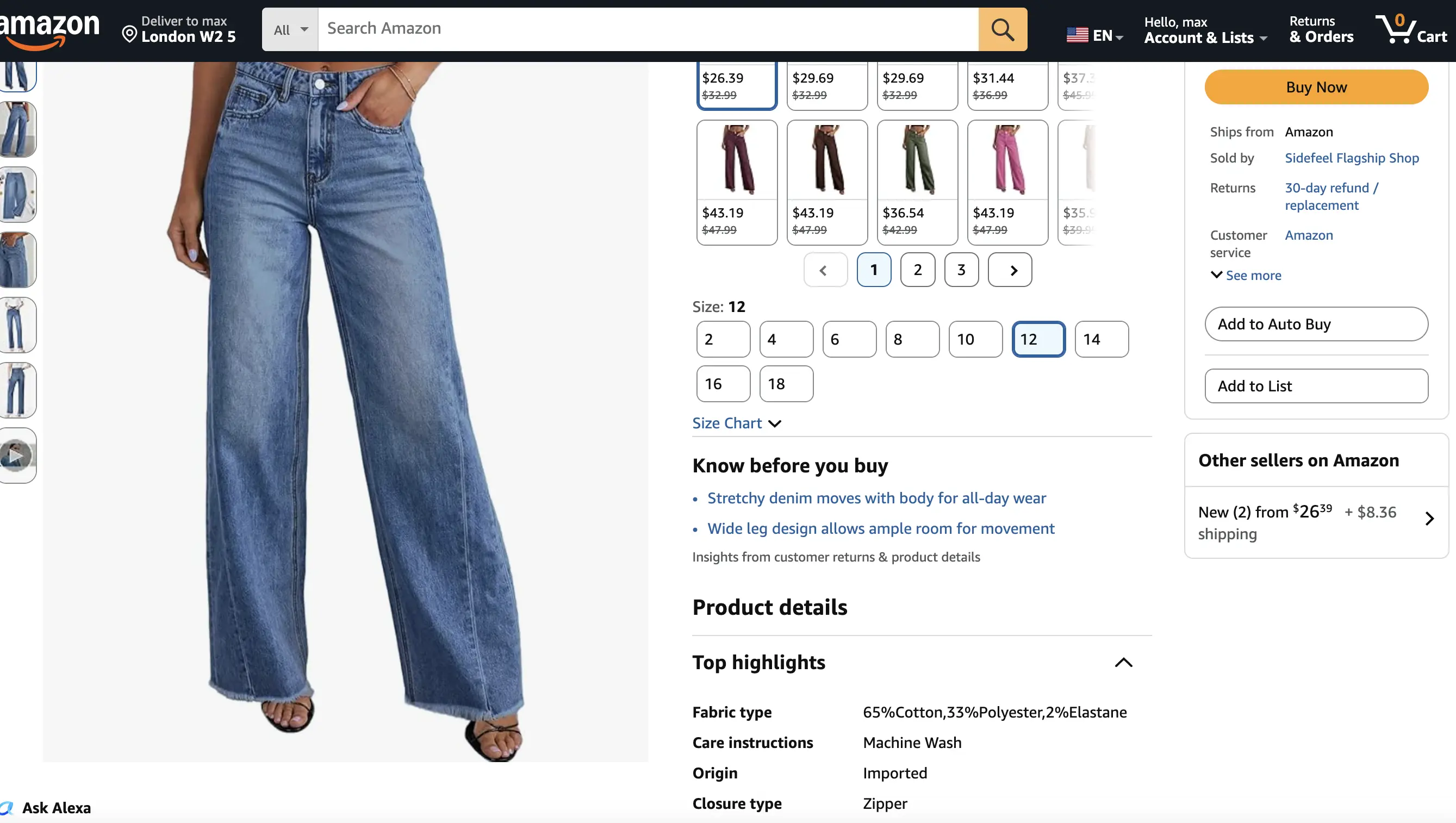
For a logged-in shopper, Amazon now surfaces tailored buying guidance grouped by shopper type. Value seekers see one version. Minimalists see another. DIY enthusiasts see something different again.
The content reflects what Amazon already knows about that person, including recent purchases. Someone who has recently bought running shoes and a set of resistance bands gets guidance framed around an active, fitness-minded lifestyle. Someone whose history leans toward baby products and kitchen storage sees the same item described in an entirely different light.
Open a fresh account with no purchase history and the experience collapses back to a single generic default. Browse while logged out entirely and the feature disappears, because there is no personalisation layer to draw from.
This is the clearest public sign yet of what Amazon has been building toward, and the company has been unusually open about the machinery behind it.
What's powering this
Amazon's research team recently published a paper on what they call Comprehensive Synthetic Personas. The key takeaway is that rather than training its personalisation systems on real customer data, Amazon generates large numbers of fictional shoppers and trains on those instead. It sidesteps the privacy problems that come with using real purchase histories, and Amazon reports it actually works better than training on real data.
Each synthetic persona is rich. The research describes profiles built from roughly 130 attributes spanning a shopper's interests, background, and behaviour, drawn from an interest map of more than 1,800 nodes. Crucially, these personas capture not just what a shopper likes, but how strongly they like it and whether a signal is a genuine preference or a one-off. A persona does not simply note "interested in coffee." It distinguishes the daily-ritual espresso enthusiast from the person who bought a cafetiere once as a gift.
That nuance is exactly what is now showing up on product pages. When "Know Before You Buy" decides which features of your product to surface to which shopper, it is reasoning through one of these personas.
What's actually happening on the page
When a shopper engages with the feature, Amazon answers their questions directly. Ask whether a cordless vacuum handles pet hair, or how long the battery lasts on a single charge, and the answer comes back in plain language, pulled from your listing content. This is the same conversational shopping behaviour Rufus has been training shoppers to expect, now wired into the buying-decision moment itself.
Two things make this different from anything Amazon has done before.
First, the system reasons about your product through the lens of a persona rather than a keyword. It is not matching a search term to a title. It is deciding whether your product fits what a value seeker, a minimalist, or a DIY enthusiast actually cares about, and then describing it accordingly.
Second, and this is the detail most brands will miss: customer returns data has entered the picture. Amazon has never surfaced returns signals in a shopper-facing experience before. That data point sits almost entirely outside a brand's direct control, which makes everything you can control matter far more.
What this means for your listings
Three shifts stand out, and they all point in the same direction.
Your bullet points are working harder than they ever have. They are no longer a static feature list that a human skims. They are source material that Amazon's persona engine reads, interprets, and serves selectively to different shopper types. Weak or generic bullets give the engine nothing to work with, so it falls back on guesses.
Content alone is no longer enough, because context now decides what surfaces. A bullet that speaks to a value seeker will not necessarily land with a DIY enthusiast. If your listing only carries content written for one type of buyer, you are invisible to the rest. The brands winning here are the ones whose listings carry the context each persona needs, written deliberately rather than left to chance.
Data has to replace assumption. Too many brands are still guessing about what their customers want. The alternative is to look at the actual volume behind shopper intent. For a kitchen knife, is the larger audience home cooks building their first proper set, or experienced cooks replacing a worn blade? How big is the everyday-meal-prep segment relative to the serious-hobbyist one? When you understand the real volume behind each persona, you can write toward the largest and most valuable segments rather than toward a guess.
How to optimise for it
So what do you actually do about it? A few practical moves.
Write your bullets for more than one buyer. Map out the handful of shopper types most likely to land on your page, then make sure your listing carries something each of them would care about. A buyer focused on durability and a buyer focused on style are reading the same listing looking for different things, and both need to find them.
Answer the obvious questions before they're asked. The feature works by surfacing things shoppers want to know. If a question comes up again and again, whether it's about fit, materials, compatibility, or care, put the answer plainly in your content so the engine has a clear, accurate source to pull from rather than inferring.
Tackle your returns reasons head-on. Returns data is now feeding what shoppers see, and you can influence it. If items come back because they run small or the colour looks different in person, fixing your sizing guidance and imagery does double duty: fewer returns, and a cleaner signal flowing into what Amazon surfaces.
Lead with your highest-volume buyers. You cannot write for everyone equally, so anchor your listing around the largest and most valuable segments in your category, then layer in the rest. Get the biggest audience right first.
Where Azoma comes in
The hard part of all this is scale. Understanding that personas now drive discovery is one thing. Rewriting an entire catalogue so every listing carries the right context for every relevant shopper type is another entirely, and no team is doing that by hand across thousands of ASINs.
This is the problem Azoma was built for. We optimise listings at scale across Amazon, structuring your content so that the context each shopper persona needs is actually present in the listing rather than left for the engine to infer. We work from intent and volume data, not assumption, so your catalogue speaks to the segments that carry the most weight in your category.
Amazon's search experience is changing permanently, and synthetic personas are now part of how every product gets understood. The controllables are your context, your content, and the data behind both. Those are exactly the things we help brands get right.
If you'd like a look at where your listings stand against this shift, we're happy to walk you through it. Get in touch for a demo here.

Article Author: Max Sinclair